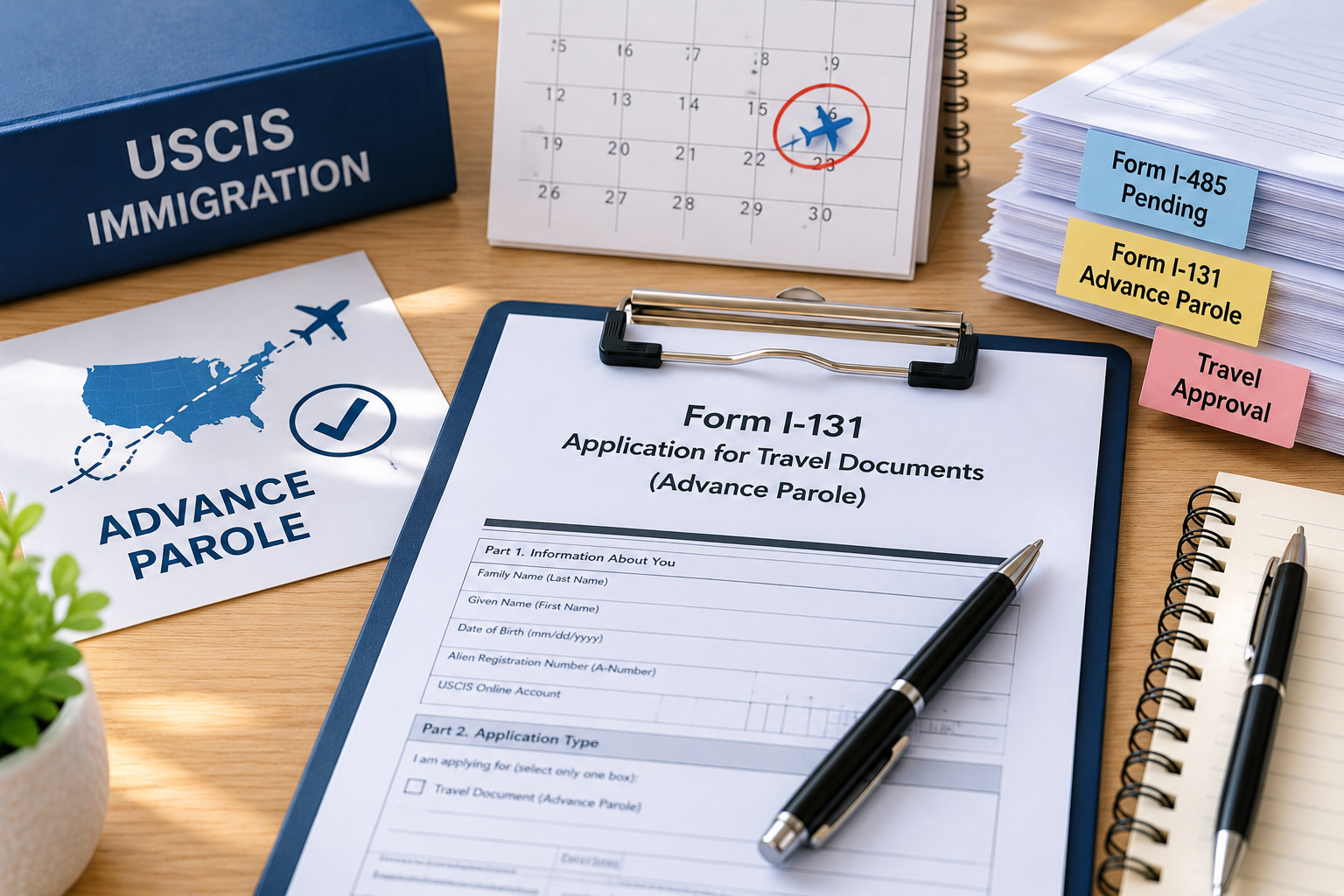
Traveling outside the United States while a green card application is pending can be risky. Many applicants hear the term “advance parole” but are not sure what it means or whether they need it.
Advance parole is a travel document that may allow certain people to leave the United States and return while an immigration application is still pending. For many adjustment of status applicants, advance parole is requested by filing Form I-131 with USCIS.
This does not mean travel is always safe. Advance parole gives permission to travel and request reentry, but it does not guarantee that every person will be admitted back into the United States. Your immigration history, prior violations, unlawful presence, criminal history, and other facts can still matter.
What Does Advance Parole Mean?
Advance parole is a type of travel permission issued before a person leaves the United States.
For green card applicants, it is often connected to a pending Form I-485, Application to Register Permanent Residence or Adjust Status. If approved, advance parole may allow the applicant to travel temporarily and return while the green card case is still pending.
USCIS explains that Form I-131 is used to apply for travel documents, parole documents, and certain arrival/departure records. Applicants should always check the latest USCIS instructions before filing because form rules, fees, and filing addresses can change.
Why Advance Parole Matters for Green Card Applicants
If your Form I-485 is pending and you leave the United States without the proper travel document, USCIS may consider your adjustment of status application abandoned in some cases.
That is why advance parole can be important. It helps protect the pending green card application for certain applicants who need temporary travel.
Common reasons someone may consider advance parole include:
- Visiting a sick family member
- Attending an important family event
- Handling urgent personal matters abroad
- Traveling for work, if appropriate
- Returning to a home country for a short temporary trip
Even if the reason is serious, it is important to wait for approval before traveling unless you have a separate valid status and understand the rules that apply to your case.
Is Advance Parole the Same as a Visa?
No. Advance parole is not the same as a visa.
A visa is usually placed in a passport by a U.S. embassy or consulate and allows a person to request entry in a specific visa category.
Advance parole is different. It is a travel document connected to certain immigration situations, such as a pending adjustment of status case. It may allow a person to return to the United States after temporary travel, but it does not replace every immigration requirement.
This difference matters because some people assume advance parole works like a regular visa. It does not.
Who May Need Advance Parole?
Many people with a pending Form I-485 may need advance parole before leaving the United States. USCIS specifically directs applicants who need to leave temporarily while Form I-485 is pending to review the Form I-131 instructions.
Advance parole may also apply in other immigration situations, but this article focuses mainly on green card applicants with a pending adjustment of status case.
You should be extra careful before traveling if you have:
- Unlawful presence in the United States
- Prior visa overstays
- A removal or deportation order
- Criminal history
- Prior immigration fraud or misrepresentation issues
- A pending asylum case
- DACA or TPS-related travel questions
- Any complicated immigration history
In these situations, leaving the United States may create serious problems. It is wise to speak with a qualified immigration attorney before making travel plans.
How Do You Apply for Advance Parole?
Many applicants request advance parole by filing Form I-131, Application for Travel Documents, Parole Documents, and Arrival/Departure Records.
Depending on the situation, some applicants may file Form I-131 together with Form I-485. Others may file it later after the green card application is already pending.
The basic process may include:
- Completing the correct version of Form I-131
- Including the required supporting documents
- Paying the correct fee if required
- Mailing the application to the correct USCIS address or filing online if available for the category
- Waiting for USCIS to issue a decision
Do not rely on old instructions or old fee information. USCIS forms, fees, and filing addresses may change, so always check the official Form I-131 page before filing.
What Documents May Be Needed?
The documents depend on the reason for travel and the applicant’s immigration category. In general, a green card applicant may need to include proof that Form I-485 is pending, identity documents, photos if required, and an explanation or evidence related to the travel request.
Examples may include:
- Form I-485 receipt notice
- Copy of a government-issued identity document
- Passport-style photos, if required
- Explanation of the travel reason
- Evidence of urgent travel, if asking for emergency processing
- Other documents listed in the Form I-131 instructions
This is only a general list. The correct documents depend on your case and the current USCIS instructions.
Can You Travel Right After Filing Form I-131?
Usually, you should not travel just because you filed Form I-131.
Filing the form is only a request. You generally need to wait until USCIS approves the request and issues the advance parole document before leaving the United States.
If you leave too early, you may create problems for your pending Form I-485. For some applicants, leaving without the proper document can cause USCIS to treat the green card application as abandoned.
Does Advance Parole Guarantee Reentry?
No. Advance parole does not guarantee that you will be allowed back into the United States.
When you return, you may still be inspected by U.S. Customs and Border Protection at the airport or port of entry. The officer reviews your documents and decides whether you may enter under the circumstances.
This is one reason travel should not be treated casually. Even with advance parole, applicants with complicated immigration history should get legal advice before leaving the United States.
What If There Is an Emergency?
USCIS has information for people who need emergency travel documents in urgent situations. Emergency requests usually require evidence of the emergency and are handled differently from regular filings.
An emergency may include a serious illness, death, or urgent humanitarian situation involving a close family member. However, not every travel reason qualifies as an emergency.
If your situation is urgent, check the current USCIS emergency travel instructions and prepare strong supporting evidence.
Common Mistakes to Avoid
Advance parole can be helpful, but mistakes can be costly.
Common mistakes include:
- Leaving the United States before advance parole is approved
- Assuming Form I-131 approval guarantees reentry
- Using old filing instructions
- Not checking the correct USCIS filing address
- Forgetting to include required evidence
- Traveling while having serious immigration issues
- Staying outside the U.S. longer than expected
- Assuming advice from someone else’s case applies to your case
Every immigration case is different. A travel decision that was safe for one person may be risky for another.
Advance Parole FAQ
Is advance parole only for green card applicants?
No. Advance parole may apply in different immigration situations. However, many people hear about it because they have a pending Form I-485 adjustment of status application.
Can I travel while my green card application is pending?
Some applicants may be able to travel if they have advance parole or another travel-authorized status. But travel can still be risky depending on the case.
What form is used for advance parole?
Many applicants use Form I-131. USCIS uses Form I-131 for different types of travel documents and parole-related requests.
Can I leave the U.S. after filing Form I-131?
Filing Form I-131 is not the same as approval. In general, you should wait until USCIS approves the request and issues the travel document before leaving.
Will my green card case be denied if I travel?
Not always. But leaving without proper permission may cause problems, including possible abandonment of the Form I-485 in some cases. The risk depends on your situation.
Should I talk to a lawyer before traveling?
If your case is simple, you may still want to carefully review USCIS instructions. If you have unlawful presence, prior overstays, criminal history, removal history, asylum issues, DACA/TPS questions, or any complicated immigration facts, speaking with a qualified immigration attorney is a good idea.
Before making travel plans, check whether you need advance parole, whether your Form I-131 has been approved, and whether your immigration history creates extra risk. Travel during a pending green card case should be planned carefully, not rushed.
This article is for general information only and is not legal advice.