After filing a change of status request with USCIS, many applicants feel unsure about what they can do while waiting for a decision.
Can you stay in the United States? Can you work? Can you study? Can you travel? The answer depends on your current status, the status you requested, and the facts of your case.
This article explains common things to understand while your change of status case is pending. It is general information only, not legal advice.
What Does “Pending” Mean?
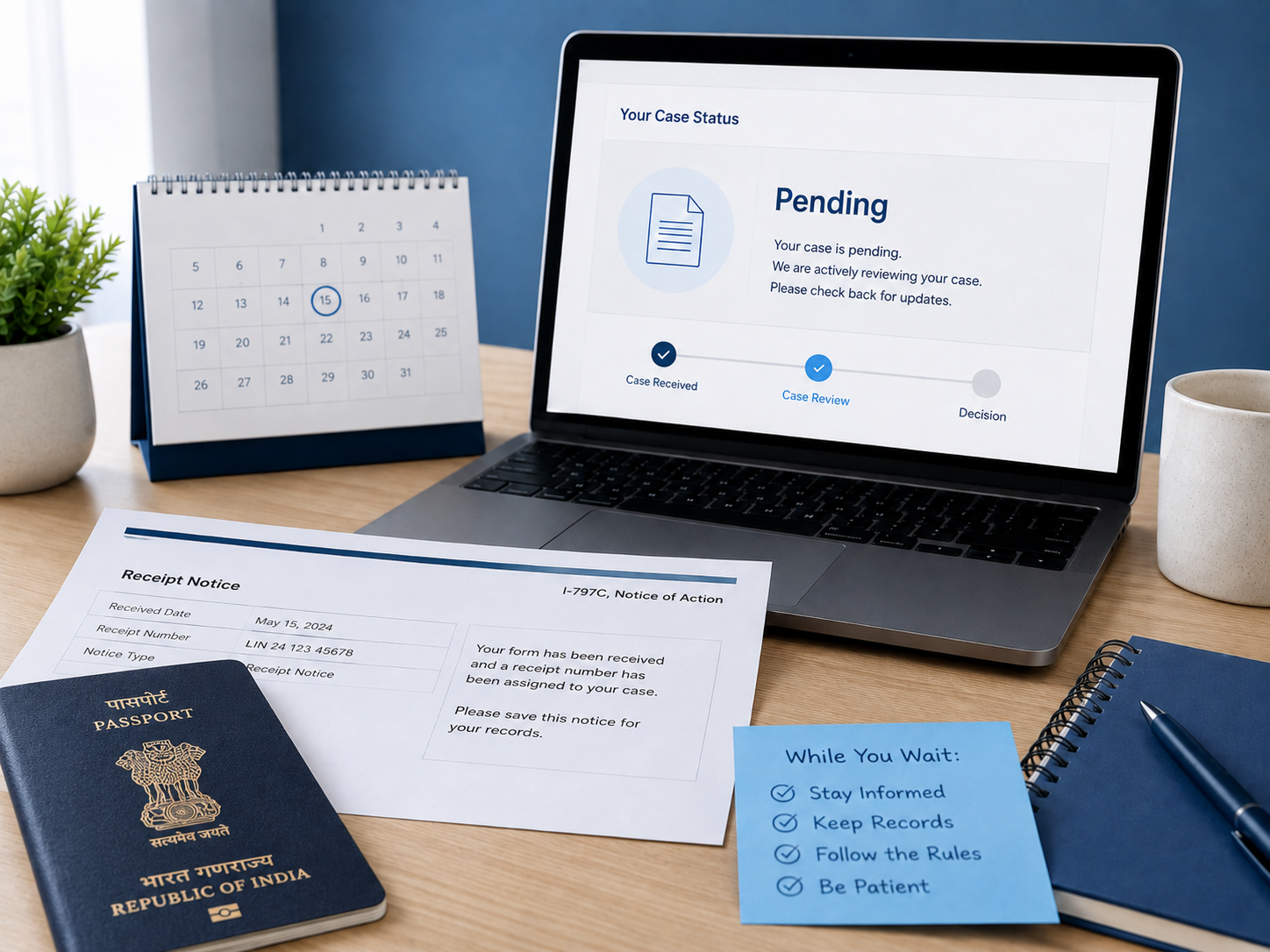
“Pending” means USCIS has received your application or petition, but has not made a final decision yet.
After filing, USCIS usually sends a receipt notice. The receipt notice has a receipt number that you can use to check your case status online.
A pending case does not mean the case is approved. It only means USCIS is still reviewing it.
Can You Stay in the U.S. While Waiting?
Many people who file a change of status request on time may remain in the United States while USCIS reviews the case. However, this depends on the situation.
USCIS generally says a person should file an extension or change of status request before the current authorized stay expires.
If you filed late, had a status violation, or are not sure whether your current status was valid, your case may be more complicated.
Keep Following the Rules of Your Current Status
While your case is pending, you should be careful to keep following the rules that apply to you.
For example:
- Do not work unless you are authorized to work.
- Do not start school too early if your requested status does not allow it yet.
- Do not assume filing gives you the benefits of the new status.
- Keep copies of your receipt notice and filing records.
For F or M student change of status cases, USCIS explains that applicants may need to maintain valid nonimmigrant status while the change of status request is pending.
Do Not Start the New Activity Too Early
A common mistake is thinking that filing a change of status request gives permission to start the new activity right away.
In many cases, you must wait until USCIS approves the request.
For example, if you are changing from visitor status to student status, you should not assume you can begin studying just because you filed the application. USCIS policy explains that an applicant changing to F-1 status must wait until the change of status is approved and until the proper timing before the program start.
Be Careful About Travel
Travel can affect a pending change of status case.
If you leave the United States while your change of status request is pending, it may affect whether USCIS can approve the change of status part of the request. In some cases, you may need to apply for a visa at a U.S. embassy or consulate before returning.
Before traveling, check official instructions or speak with a qualified immigration attorney.
Keep Your Address Updated
If you move while your case is pending, update your address with USCIS.
USCIS says most non-U.S. citizens must report a change of address within 10 days of moving, and people with pending cases should update their address so they do not miss notices.
Missing a USCIS notice can cause problems, especially if USCIS sends a Request for Evidence or another important letter.
Watch for USCIS Notices
While your case is pending, check your mail and USCIS account carefully.
USCIS may send:
- Receipt notice
- Biometrics notice
- Request for Evidence
- Approval notice
- Denial notice
- Other case updates
If USCIS sends a Request for Evidence, read the deadline carefully. Missing the deadline can lead to a denial.
Track Your Case
Use your USCIS receipt number to track your case status.
You should also keep:
- A copy of your full filing package
- Receipt notice
- Delivery confirmation
- USCIS account information
- Copies of any USCIS notices
- Any response you send to USCIS
These records may be useful for future applications or visa interviews.
What If Your I-94 Expires While the Case Is Pending?
This can be a sensitive issue.
If you filed on time, you may be in a different situation from someone who filed after the I-94 expired. The exact effect depends on the type of request, your current status, and the facts of your case.
Do not assume every pending case protects you in the same way. If your I-94 expires while waiting, and you are unsure what that means, consider getting qualified immigration advice.
What If USCIS Approves the Case?
If USCIS approves your change of status, review the approval notice carefully.
Check:
- Your name
- Approved status
- Validity dates
- New I-94, if included
- Any conditions or limits
Keep the approval notice in a safe place. You may need it later for school, work, travel, or future immigration filings.
What If USCIS Denies the Case?
If USCIS denies your case, read the denial notice carefully.
Your options may depend on:
- Whether your previous status has expired
- Why USCIS denied the case
- Whether you have another filing option
- Whether you need to leave the United States
- Whether legal help is needed
Do not ignore a denial notice. A denial can affect your ability to stay in the U.S. or apply again later.
FAQ
Does a pending change of status mean I am approved?
No. Pending only means USCIS is still reviewing the case.
Can I work while my case is pending?
Do not work unless your current status or separate work authorization allows it. Filing a change of status request does not automatically give work permission.
Can I travel while my case is pending?
Travel can affect a pending change of status request. Check official instructions before leaving the U.S.
Should I update my address if I move?
Yes. Most non-U.S. citizens must update their address with USCIS within 10 days of moving. This is especially important if you have a pending case.
What should I do if I get an RFE?
Read the Request for Evidence carefully, check the deadline, and respond with the requested documents before the deadline.
Final Reminder
A pending change of status case is not the same as an approval. While waiting, you should follow the rules of your current status, avoid unauthorized work or study, be careful with travel, update your address, and watch for USCIS notices.
If your I-94 is expired, your case was filed late, or you have any status violation, consider speaking with a qualified immigration attorney before making decisions.