Green Sheet, CEAC Refused Status, and Next Steps
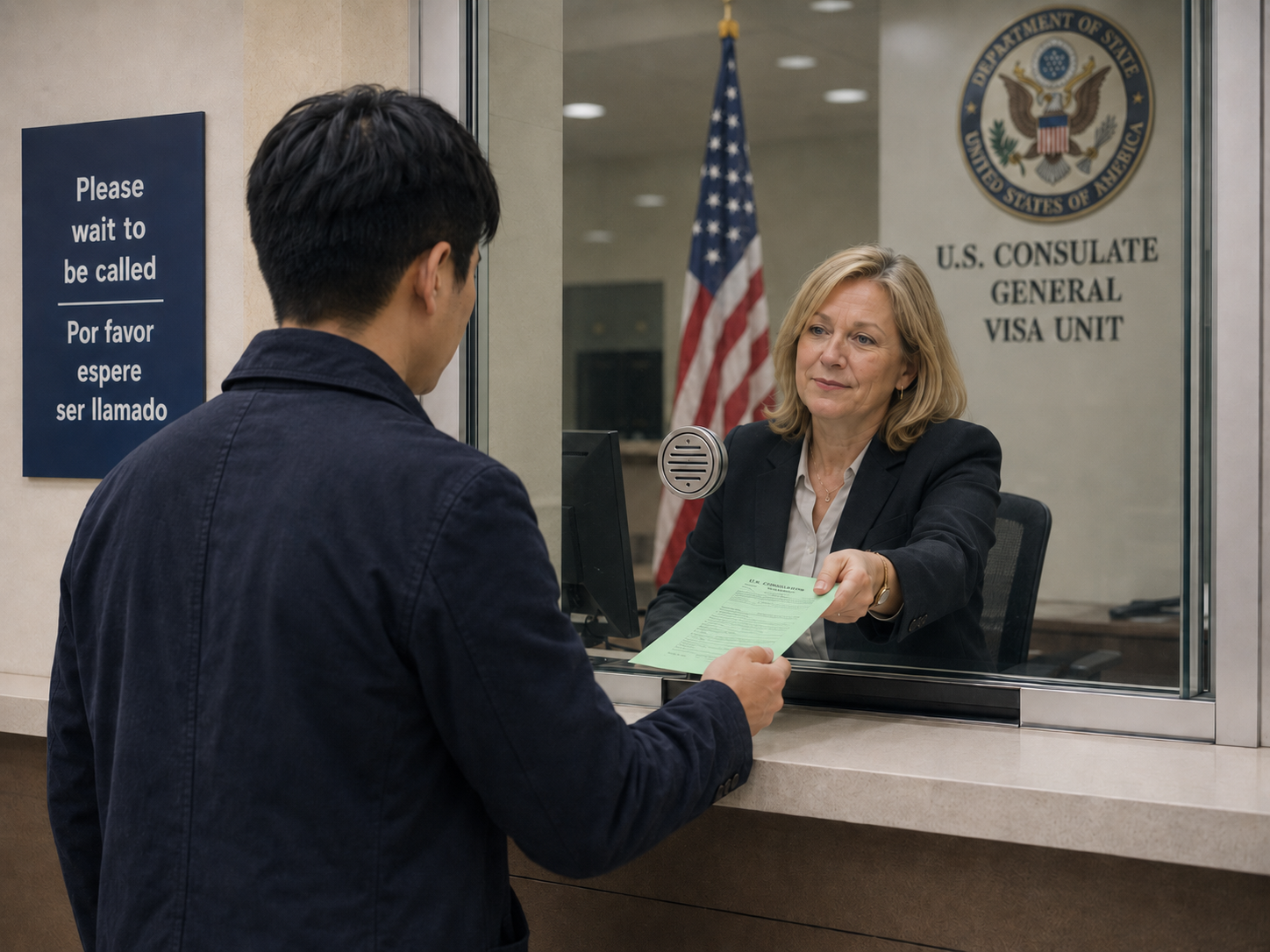
If you recently attended a U.S. visa interview and received a 221(g) notice, you may be confused about what it means.
In many cases, the consular officer explains at the interview that additional documents, additional review, or administrative processing is required before the visa can be issued. Even when the officer explains the situation, many applicants become worried after checking their visa status online and seeing “Refused” on CEAC.
This can be stressful, especially if the applicant was not told that the visa was permanently denied.
The important thing to understand is that a 221(g) refusal does not always mean the visa has been permanently denied. In many cases, the application may still move forward after the applicant submits requested documents or after the embassy or consulate completes additional review.
The U.S. Department of State explains that when a case is refused under 221(g), a consular officer may later reconsider the application based on additional information or after administrative processing is completed. (Travel.state.gov)
This article explains what 221(g) means, why it happens, why CEAC may show “Refused,” and what applicants should do next.
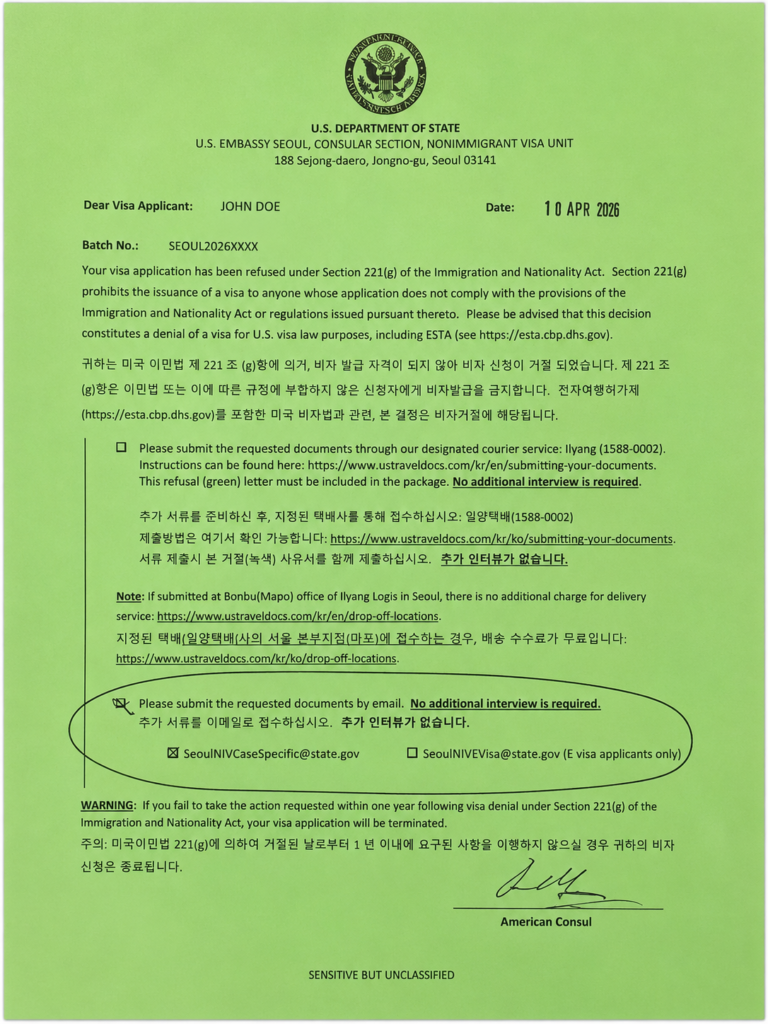
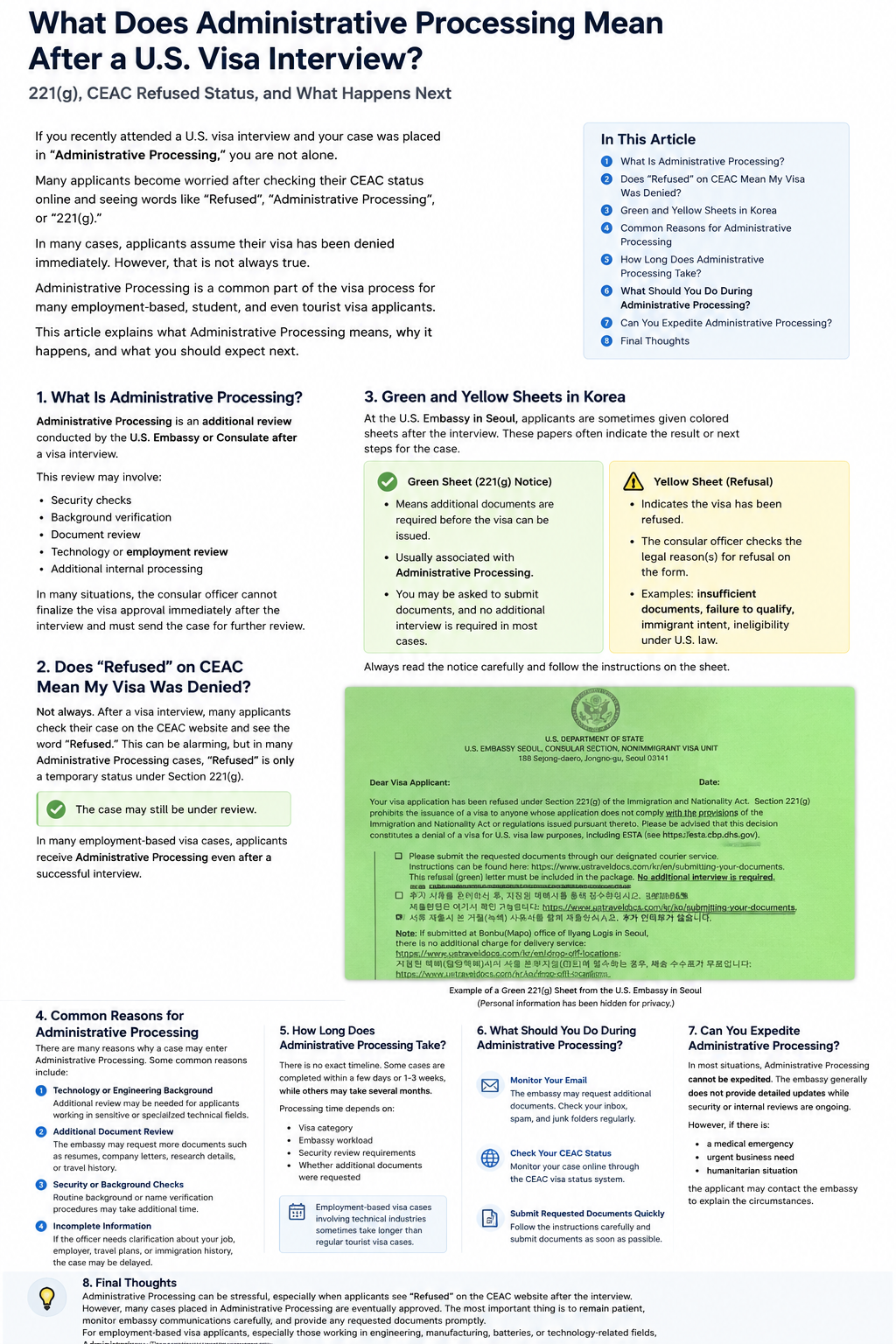
Example of a green 221(g) notice. In many cases, this type of notice means the applicant must submit additional documents or wait for further review before the visa can be issued. Approved applicants usually do not receive this type of sheet.
What Is 221(g)?
221(g) refers to a section of the Immigration and Nationality Act used in visa cases when the consular officer cannot issue the visa at that time.
A 221(g) refusal may happen when:
- the application is missing required documents
- the officer needs more information
- additional administrative processing is required
- background or security checks are needed
- the officer cannot yet determine whether the applicant qualifies for the visa
The Department of State explains that when a visa application is denied under 221(g), it may mean the consular officer does not have all the information needed to determine eligibility, or that additional administrative processing is required. (Travel.state.gov)
In simple terms, 221(g) usually means:
“Your visa cannot be issued yet.”
It does not always mean:
“Your visa is permanently denied.”
Does 221(g) Mean My Visa Was Denied?
Not necessarily.
This is one of the most confusing parts of the visa process.
Legally, a 221(g) case is considered a refusal at that moment. That is why CEAC may show the case status as “Refused.” However, the case may still continue if the applicant submits the requested documents or if the embassy or consulate completes the required review.
The Department of State has explained that some CEAC cases previously shown as “Administrative Processing” are now shown as refused under Section 221(g), and that the status may later change if the applicant is found eligible or if outstanding issues are resolved. (Travel.state.gov)
So if your CEAC status says Refused after receiving a 221(g) notice, you should carefully review the notice and follow the embassy or consulate’s instructions.
Why Did I Receive a 221(g) Notice?
There are many reasons why a visa applicant may receive a 221(g) notice.
Common reasons include the following.
1. Missing or Incomplete Documents
The embassy or consulate may need additional documents before it can continue processing the case.
Examples may include:
- updated resume or CV
- employment verification letter
- company support letter
- financial documents
- travel history
- prior visa records
- relationship evidence
- school or employment records
- business documents
- supporting company documents
If documents are requested, the applicant should submit exactly what the notice or instruction sheet asks for.
2. Additional Administrative Processing
Some cases require additional internal review after the interview.
This is commonly called Administrative Processing.
Administrative processing may involve background checks, security review, employment review, technology-related review, or other internal government processing.
When administrative processing is required, the consular officer will usually inform the applicant at the end of the interview. Processing time varies depending on the individual case. (Travel.state.gov)
3. Technical or Specialized Employment Background
Applicants who work in technical or specialized industries may sometimes receive additional review.
This may include fields such as:
- engineering
- batteries
- semiconductors
- advanced manufacturing
- chemical technology
- artificial intelligence
- research and development
- defense-related industries
In employment-based visa cases, the embassy or consulate may want to better understand the applicant’s job duties, technical background, employer, project, or purpose of travel.
4. Unclear Job Duties or Company Information
A 221(g) notice may also be issued if the consular officer needs more information about the applicant’s employment.
This may happen when the officer needs clarification about:
- what the applicant will do in the United States
- who the U.S. employer is
- how the foreign company and U.S. company are related
- why the applicant is needed in the United States
- whether the applicant qualifies for the requested visa category
- what project the applicant will support
- whether the applicant will train U.S. workers
This is common in employment visa cases where job duties, company structure, or project details must be clearly explained.
5. Prior Immigration or Visa Issues
Some applicants may receive additional review because of prior immigration history.
Examples may include:
- previous visa refusal
- prior overstay
- prior removal or deportation issue
- inconsistent information in past applications
- prior criminal or security-related concern
In these cases, the applicant should be very careful before submitting any response.
Green Sheet, Refusal Worksheet, and 221(g)
In many visa interviews, applicants who receive a 221(g) notice may be given a colored sheet, a written notice, a refusal worksheet, or a separate instruction sheet.
A green sheet is often associated with additional documents or further review.
However, the specific document request may not always appear directly on the green sheet itself. In some cases, the green sheet may provide general 221(g) instructions, while a separate refusal worksheet or instruction sheet lists the specific documents requested.
For example, an applicant may receive a separate worksheet asking for a signed support letter, company information, travel details, project information, or other supporting documents.
In many cases, the consular officer explains at the interview why the 221(g) notice is being given and what the applicant needs to submit. The applicant should carefully review every document received after the interview, including any colored sheet, refusal worksheet, email instruction, or courier instruction.
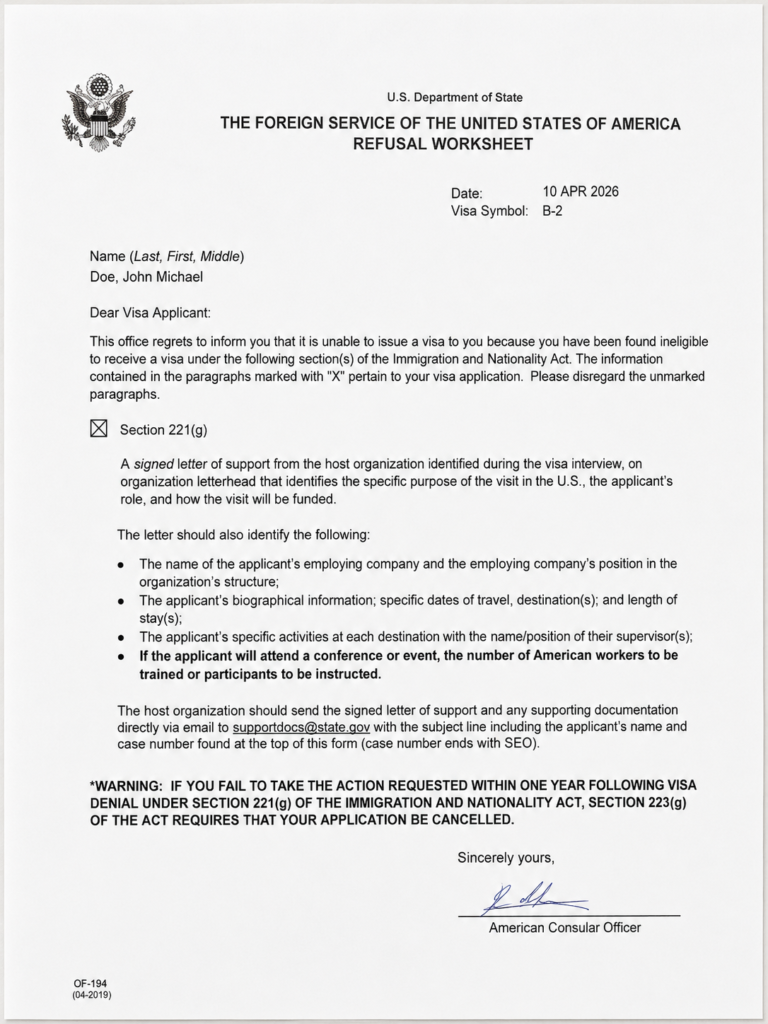
This is an example of a separate 221(g) refusal worksheet. In some cases, the green sheet provides general instructions, while a separate worksheet lists the specific documents or information requested by the consular officer.
Applicants who are approved at the interview usually do not receive a green sheet. In many approved cases, the officer simply informs the applicant that the visa has been approved, and the passport is later returned with the visa.
A green 221(g) sheet usually means the case is not ready for final issuance yet. It does not automatically mean the visa has been permanently denied.
In many green sheet cases, the notice may state that no additional interview is required. This usually means the applicant only needs to submit the requested documents according to the embassy or consulate’s instructions.
What Should I Submit After Receiving 221(g)?
Applicants should carefully follow the instructions given by the embassy or consulate.
Do not assume that every 221(g) case requires the same documents. The correct response depends on the specific notice, worksheet, or instruction received after the interview.
If the embassy or consulate asks for additional documents by email, the email should clearly identify the case.
The email should usually include:
- full name
- date of birth
- passport number
- visa interview date
- visa category
- case number, if available
Applicants should also attach:
- the requested documents
- a copy of the 221(g) notice or green sheet
- a copy of any refusal worksheet or instruction sheet received
- a copy of the passport biographic page
- signed Form G-28, if represented by an attorney
Including a copy of the 221(g) notice, green sheet, or refusal worksheet helps the embassy or consulate identify what was requested and match the submission to the correct case.
If the applicant is represented by an attorney, a properly signed Form G-28 should also be included. This allows the attorney to communicate with the government on behalf of the applicant and may help ensure that the response is properly reviewed.
Before submitting documents, make sure they are:
- complete
- clear
- accurate
- properly translated, if required
- consistent with the visa application and interview answers
- organized according to the embassy or consulate’s instructions
A well-organized response does not guarantee approval, but it may help the embassy or consulate review the case more efficiently.
How Long Does 221(g) Take?
There is no exact timeline.
Some 221(g) cases are resolved within a few days or weeks. Others may take several months.
The timeline may depend on:
- visa category
- embassy or consulate workload
- whether documents were requested
- how quickly the applicant responds
- whether administrative processing is required
- whether security or background checks are involved
- whether the case involves employment, technology, or company review
The Department of State notes that the duration of administrative processing varies based on the individual circumstances of each case. (Travel.state.gov)
Applicants can check their visa status through the official CEAC Visa Status Check website, which is managed by the U.S. Department of State’s Consular Electronic Application Center. (CEAC)
Suggested button text:
Check Your Visa Status on CEAC
Suggested link:
https://ceac.state.gov/ceacstattracker/status.aspx
Can a 221(g) Case Be Approved Later?
Yes.
Many 221(g) cases are later approved after the embassy or consulate receives the requested documents or completes administrative processing.
The Department of State explains that a consular officer may reconsider a 221(g) refusal at a later date based on additional information or after administrative processing is resolved. (Travel.state.gov)
However, approval is not guaranteed.
The final decision depends on whether the applicant qualifies for the visa and whether all legal and documentary requirements are satisfied.
What Should You Not Do After 221(g)?
After receiving a 221(g) notice, applicants should avoid common mistakes.
Do not:
- ignore the notice
- submit incomplete documents
- send unclear or disorganized files
- submit inconsistent information
- wait too long to respond
- assume the case is permanently denied without reading the notice
- rely only on CEAC status without reviewing the actual notice
- repeatedly email the embassy without following instructions
The most important step is to carefully read all instructions and submit exactly what is requested.
When Should You Consider Legal Help?
Applicants may want to consider speaking with an immigration attorney if:
- the 221(g) notice requests complicated documents
- the case involves technical or sensitive employment
- the applicant has prior visa refusals
- the applicant has prior overstays or immigration violations
- the case has been pending for a long time
- the applicant is unsure how to respond
- the refusal worksheet requests company or project documents
- the notice lists a specific legal ground beyond 221(g)
Employment-based cases involving company documents, technical job duties, specialized knowledge, or investment projects may require a carefully prepared response.
Final Thoughts
Receiving a 221(g) notice after a U.S. visa interview can be stressful, especially when CEAC shows the case as Refused.
However, 221(g) does not always mean the visa has been permanently denied.
In many cases, the embassy or consulate needs additional documents, additional review, or administrative processing before making a final decision.
Applicants should carefully review every document received after the interview, including any green sheet, refusal worksheet, instruction sheet, or email from the embassy or consulate.
The best thing applicants can do is submit the requested documents clearly and promptly, include identifying information with the submission, and monitor email and CEAC status updates.
For applicants who received a green sheet, remember that approved applicants usually do not receive a green sheet. A green 221(g) sheet usually means the case needs additional documents or further review before the visa can be issued.
Disclaimer: This article is for general informational purposes only and does not constitute legal advice. Every visa case is different. Applicants should review their own embassy or consulate notice carefully and consult with an immigration attorney if they need legal advice about their specific situation.